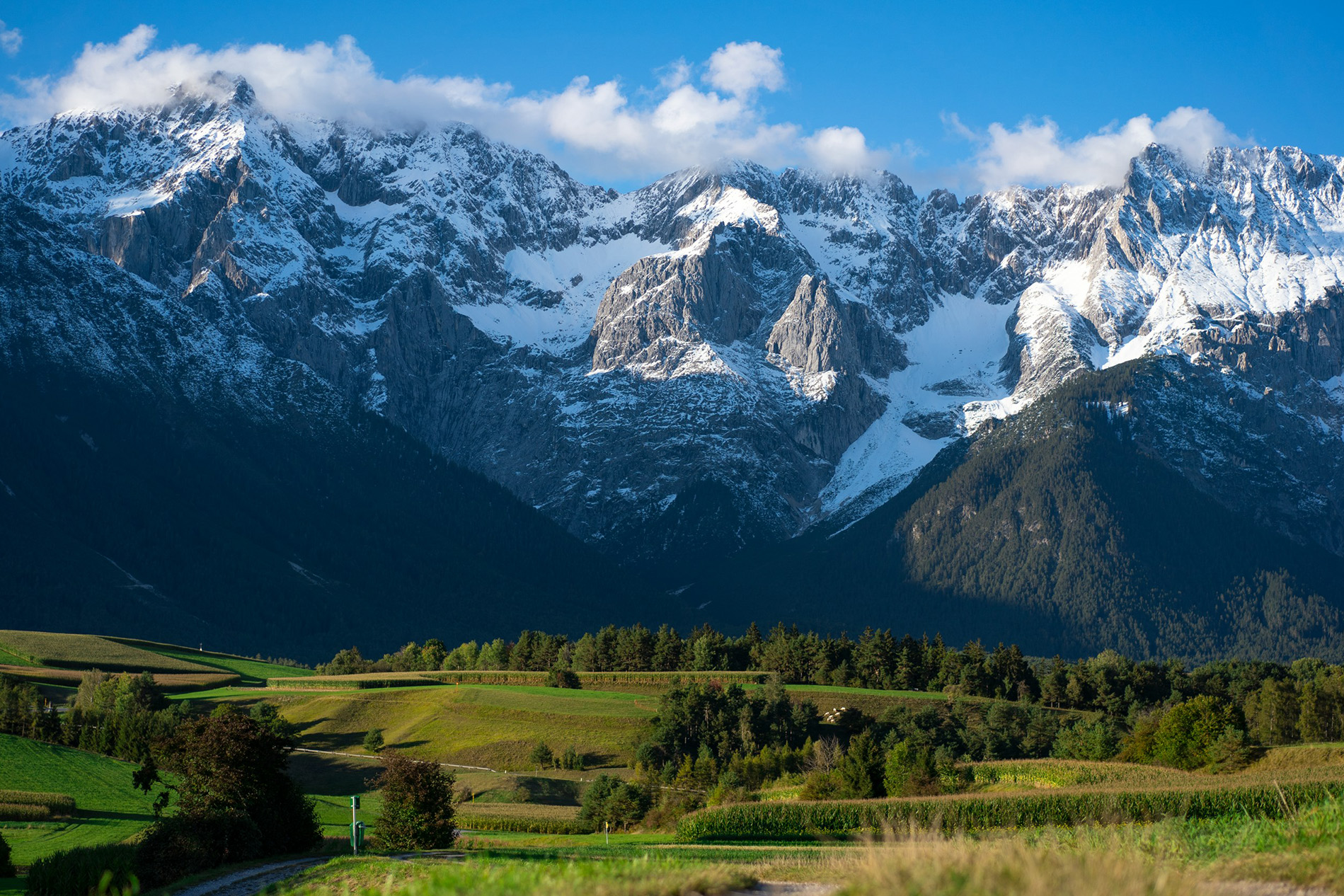
No other landscape in Europe offers the unique combination the the high alpine peaks of the Dolomites can offer: soaring mountain backdrops, ancient castles on every hilltop, forgotten trade routes, hidden alpine passes and enigmatic art from peoples long vanished. But it comes at a cost, this is no secret, and the entire world comes to enjoy it.

South Tyrol is one of Europe's most famous borderlands and probably the only one that has been able to successfully preserve this borderland aspect in age of the modern Nation-State. Despite being part of Italy, much of the region still speaks German and in parts still identifies primarily with Austria. The combination of Austrian and Italian heritage is certainly one of the more interesting cultural aspects of the region. Not to be confused with the largely Italian speaking region of Trentino to the south, South Tyrol is comprised of three main high alpine passes connecting the Mediterranean world with Central Europe. The Vinnschgau connects with Switzerland and takes travelers after some distance to the Zürich highlands. The Eisack valley leads up to Brenner Pass and over into North Tyrol and the Danubian Plain of Upper Bavaria. This was one of the most important trade routes in Medieval and Early Modern Europe. Finally the Puster Valley extends into Carinthia and heads into the hearland of Slovenia, the ancient Duchy of Carniola.
Despite its importance in antiquity and in the medieval world, South Tyrol and the ancient trade routes that spanned it, collapsed with the devastation of the Thirty Years' War. With new seaborne trade routes, the trade caravans never returned to the high alpine passes. This has left much of the Tyrolean landscape frozen in time, a snapshot taken at the end of the 18th century. Only with the advent of the railroad and modern mass tourism as the region seen a revival, and a massive one at that. South Tyrol and Trent are now some of the wealthiest regions in Italy.