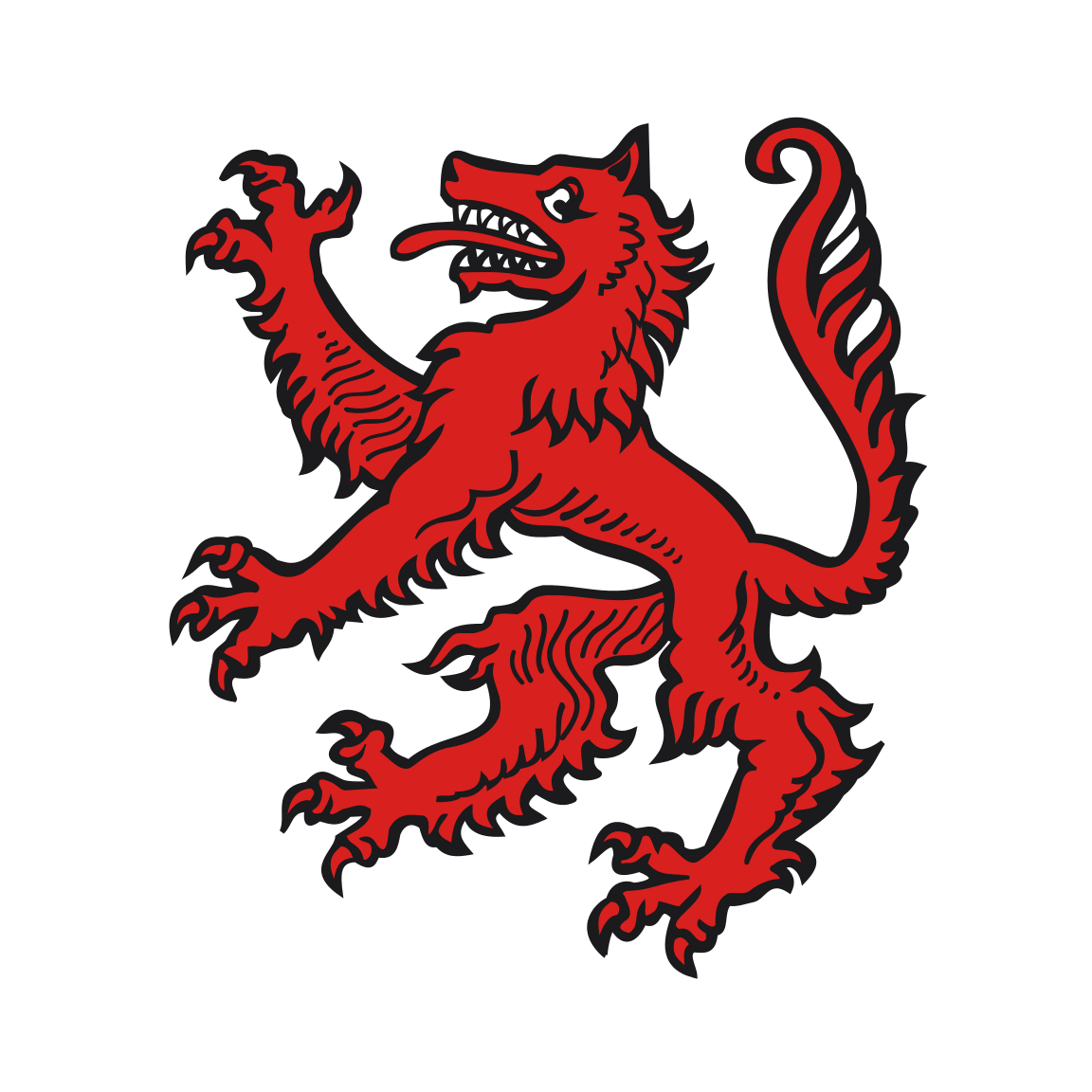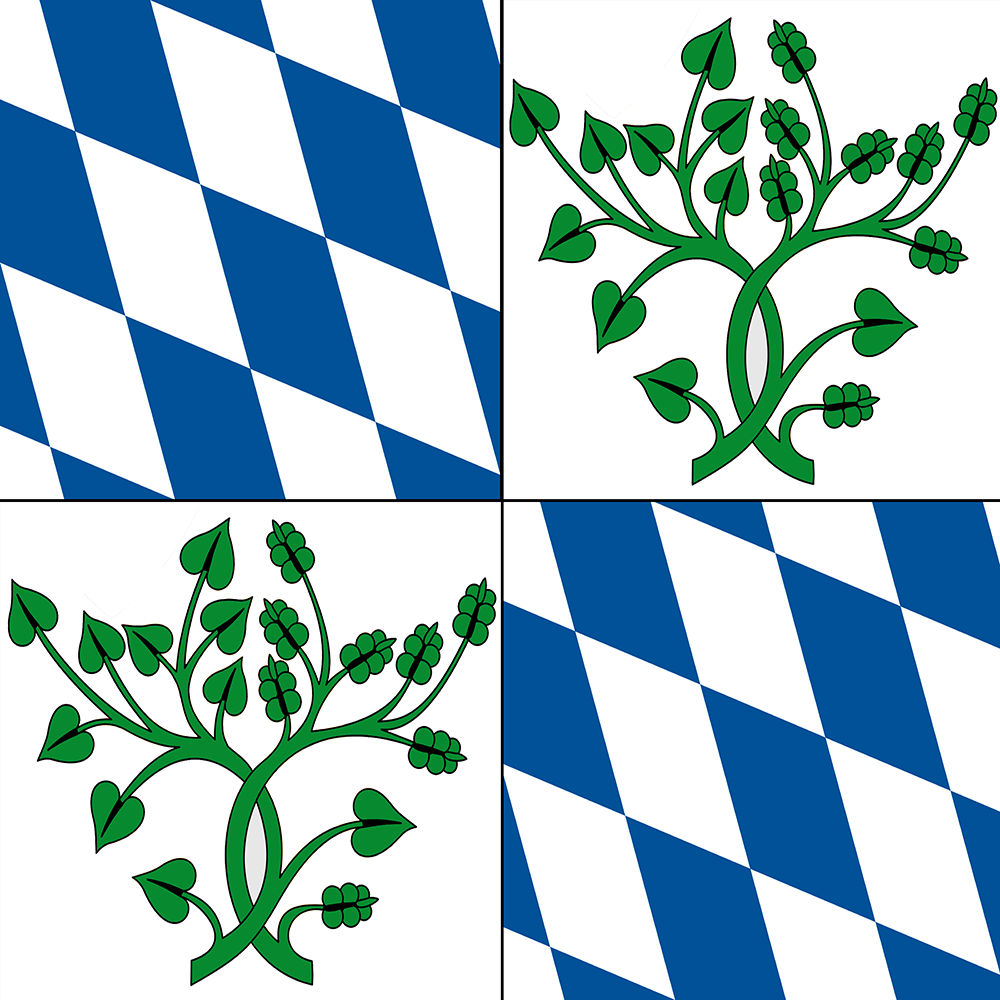
Heading East from Munich, the landscape opens into the broad valleys of the Inn and Salzach. This district spans the Bavarian and Austrian banks of the rivers, linking the historic Austrian Innviertel with towns such as Passau, Burghausen, and Braunau, its character defined by fertile plains, river trade, and the distinctive Inn-Salzach facades that line its market squares.

The Inn District occupies the fertile river country between the Alpine foreland and the Austrian border, corresponding to the historic Innviertel and the Bavarian districts along the lower Inn and Salzach. Long contested between Bavaria and Austria, the region developed as a frontier zone shaped less by mountains than by waterways. Even today, many towns on the Austrian side of the border have Bavarian symbols in their coats of arms. Linguistically, the region was once fairly distinctive, both from standard Bavarian and from Danube Austrian. However, in more recent times, the languages have standardized to their respective borders.
The rivers served as commercial arteries, carrying salt, grain, and timber, and fostering a chain of fortified towns and ecclesiastical centers. The distinctive Inn-Salzach architectural style — pastel façades crowned by ornate gables concealing uniform rooflines — gives many town centers a unified and immediately recognizable character.
Today the district combines rural floodplains, historic strongholds such as Burghausen, and the confluence city of Passau, where three rivers meet at the threshold between Bavaria and Austria.